



When you call around for air duct cleaning quotes, you may be comparing apples to oranges. Two companies can quote the same house and be describing very different work, because they aren't using the same equipment. Knowing which method a company uses tells you more about the result you'll get than the price on the estimate does.
The short version: There are two major methods in the industry — a combination of whips and negative air, which is what we use, and the rotary brush method. We own a negative air machine, and we attach a compressor with a hose and whips to it to clean the ductwork. Both methods remove dust and debris, but they don't achieve the same results. The National Air Duct Cleaners Association (NADCA) recognizes the negative air method as the most comprehensive of the two.
How the Two Methods Compare
| Negative Air | Rotary Brush | |
|---|---|---|
| Vacuum strength | Typically 2,000 CFM | 300 CFM on the high end |
| Debris size | Dust plus construction debris, plaster, rodents, even toys | Small nozzle — large objects block the vacuum |
| HVAC dampers | Works with zone-control dampers | Cannot pass through dampers |
| Smaller ductwork | Whips under 1" in diameter | 3" brushes get caught |
| Trunklines & plenums | Cleaned | No negative pressure — cannot clean these |
Vacuum Strength
A negative air machine typically vacuums at 2,000 CFM. A rotary brush system — Rotobrush, Ram Air, Goodway, Ductmaster, Rotovac — vacuums at 300 CFM on the high end. That difference in airflow is why negative air removes far more dust, dander, pollen, mold, and mildew.
Debris Size
Negative air removes more than dust. They also pull out larger pieces of construction debris, plaster, rodents — and the occasional toy. A rotary brush system can't collect debris that size, because its nozzle is small enough that large objects simply block the vacuum.
HVAC Dampers
Some homes have dampers — moveable plates inside the ductwork that direct airflow to specific areas of the house, most often as part of a zone-control system. A negative air machine is well equipped to work with dampers, so they don't pose a problem. A rotary brush system can't pass through them.
Smaller Ductwork
Negative air handles sharp turns and smaller ductwork easily, because the air sweep and whips are smaller than an inch in diameter. The 3-inch brushes used by a rotary brush system get caught in small ductwork.
Trunklines & Plenums
A trunkline is the line of ducting that serves as the distribution source for your HVAC system. The plenums are the pieces that join your HVAC equipment to the ductwork, allowing circulation between the two. Negative air cleans the trunklines and plenums. A rotary brush system creates no negative pressure, so it can't clean these areas at all.
How Each Method Works
Whips & Negative Air
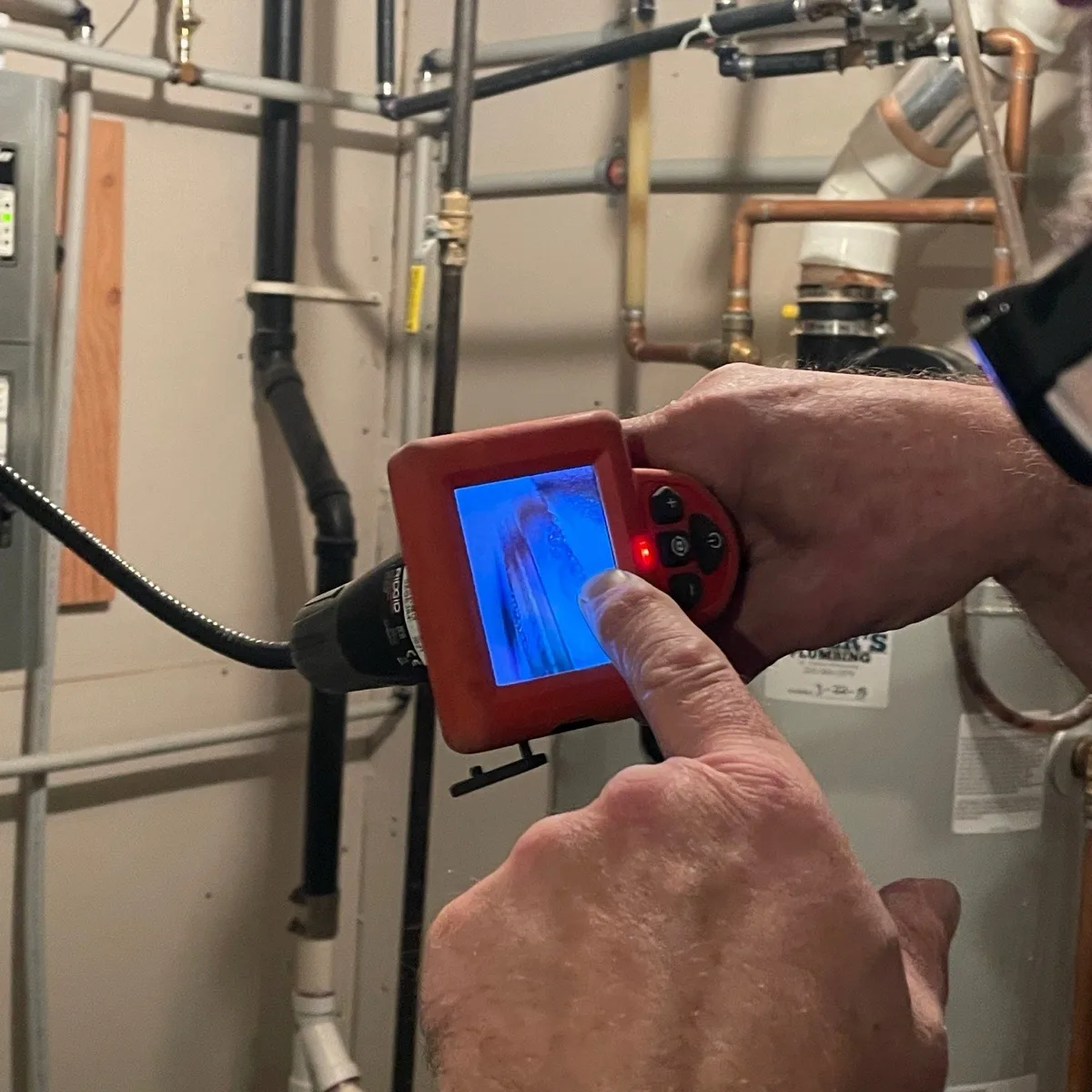
We connect the negative air machine to the ductwork or plenum, which puts the system under negative pressure. We then use a camera and whips — run off a compressor with a hose attached — to dislodge the contaminants inside. The machine pulls light particles into the attached containers. Heavier particles fall to the bottom of the ductwork, where air scrubbing tools force them toward the vacuum. The negative air method cleans the entire HVAC system — and we clean your vent covers for you as well.
Rotary Brush
Rotary brush machines have a vacuum in the center of the brush. The spinning motion throws debris in every direction. The vacuum picks up smaller particles, but it isn't strong enough to lift heavier objects, so larger particles may still be sitting at the bottom of the vent when the job is done. And because the method puts no negative pressure on the system, dirt thrown by the brush can escape into the home through seams in the ductwork.
Our Take
In our opinion, negative air is the winner — it's the method we've built our duct cleaning around, and the only one we use. Now that you know how to compare the two, which would you choose?